Lost on Island
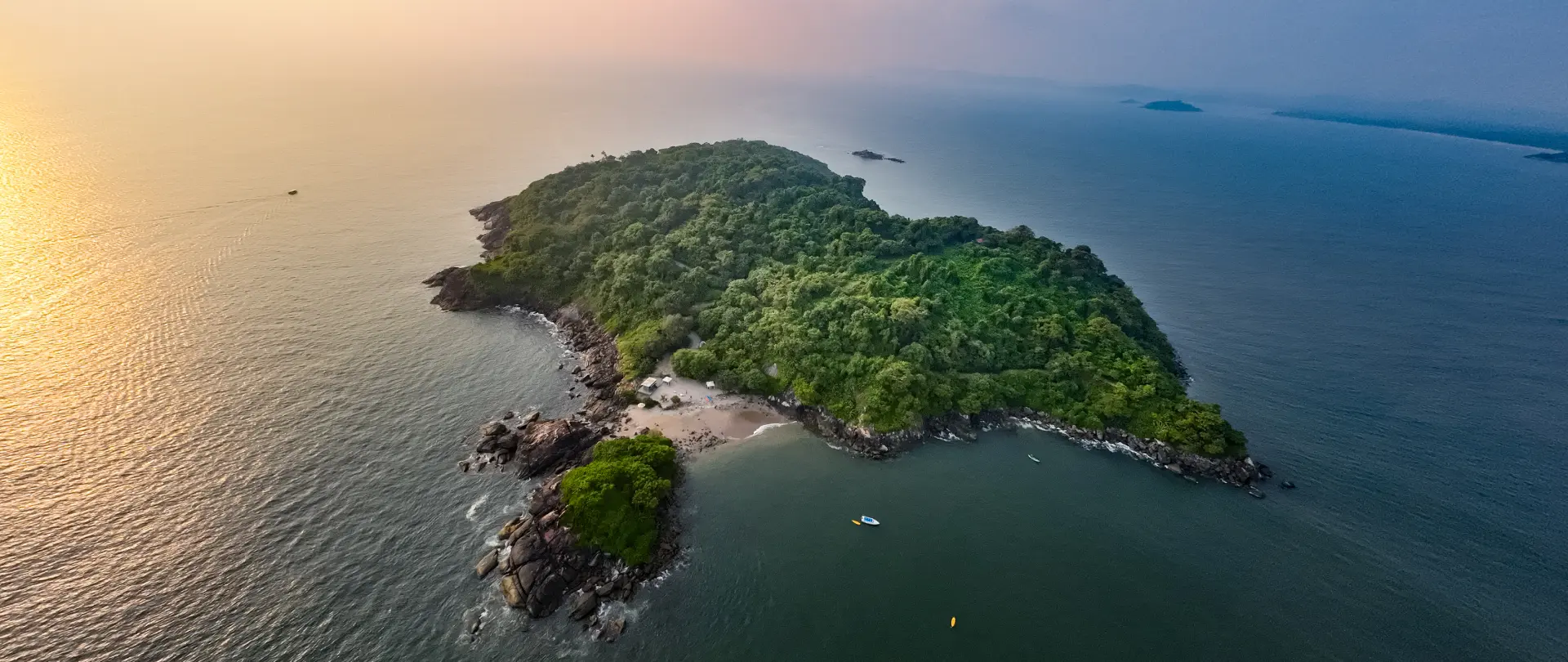
Tucked between Goa and Karnataka and suspended between land and sea exists a mysterious tortoise-shaped island, where time truly stops.
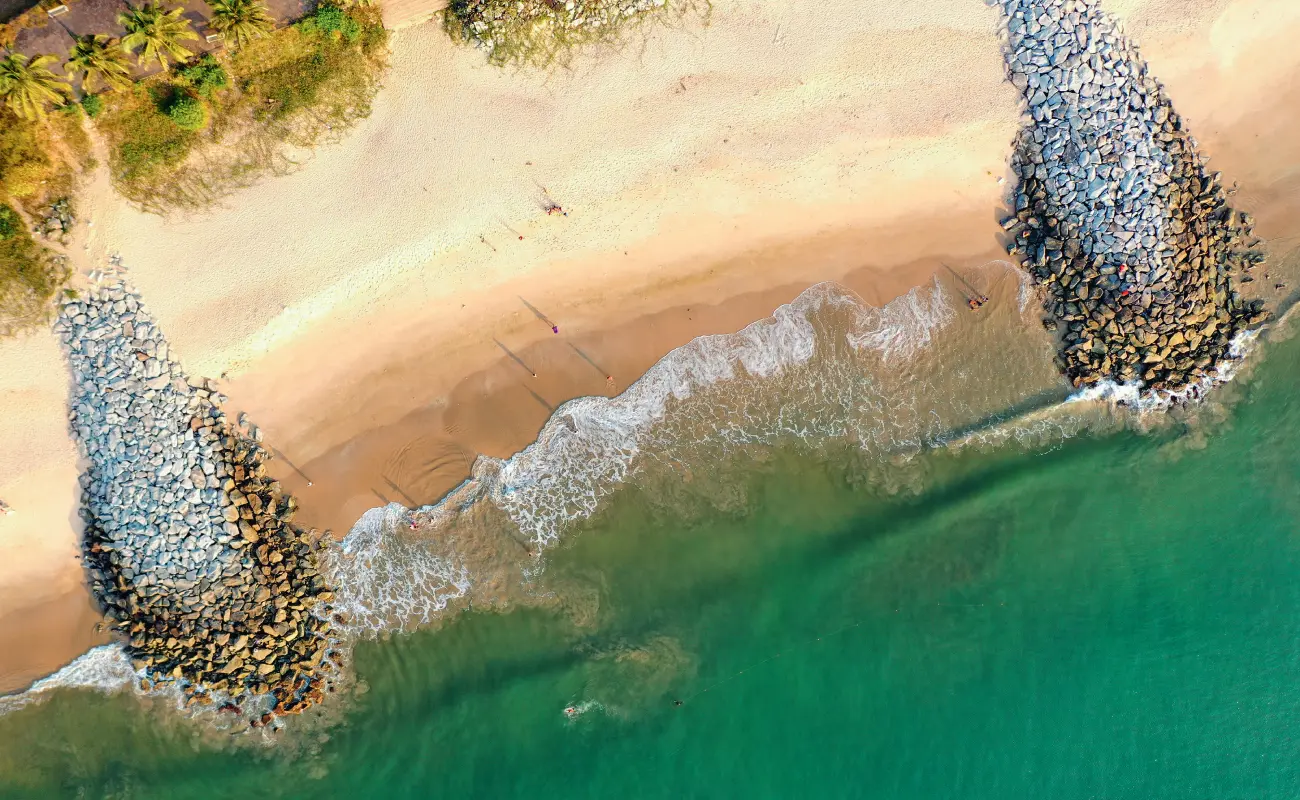
Secluded from the mainland, Kurumgad exists in its own realm; close enough to reach yet far enough to escape the cacophony of modern life.
The waves crash against the shoreline, a rhythmic lullaby that has continued uninterrupted for centuries. Here, on this tortoise-shaped outcrop of land, time moves differently. On Kurumgad Island, off the coast of Karnataka and close to Goa as well, life has its own pulse; slower, more deliberate, yet somehow more alive. Standing on these shores, it’s easy to imagine the Portuguese ships that first spotted this natural harbour formed by several islands in 1498. Some say Kurumgad is named after its shape – the kuruma or tortoise. The Portuguese named it Cintacora, perhaps after the wide shoreline resembling a cinta (sash), or possibly a mispronunciation of Chittakula, its ancient name. Whatever the etymology, the sailors recognised the preciousness of this hidden gem, a place where history and nature intertwine in spectacular harmony.
The Portuguese presence here was signifcant; Anjediva, a nearby island, off the coast of Karwar, was one of their early conquests on Indian soil. Though the Portuguese have long left, echoes of colonial influence remain in ancient structures and local stories passed down through generations.
The journey to Kurumgad begins at Devbagh beach in Karwar, where small boats ferry passengers across, who are mostly headed for the luxury resort of Cintacor on the island. Though visible from Devbagh, the island exists in its own realm; close enough to reach yet far enough to escape the cacophony of modern life. As the boat pushes away from shore, the transformation begins; with each passing wave, the noise of civilisation dims until only the splash of water against the wood remains.
Massive boulders rise from the sea, guardians of this secluded paradise. Behind them, a dense wall of emerald foliage conceals the island’s secrets. “We limit visitors,” explains Vijay Prabhu, owner of The Little Earth Group, the organisation that manages the Cintacor Island resort. “Nature must be protected. Too many footprints leave permanent scars,” he says.
This philosophy explains the profound sense of discovery one feels at the first step on the warm sand. Unlike commercialised beaches with rows of loungers and vendors, Kurumgad offers pristine solitude. The beach stretches empty to the horizon, an invitation to explore without boundaries or expectations.
A steep path leads from the shore into the heart of the island, weaving through dense tropical vegetation, where birds sing from the branches overhead. Occasionally, glimpses of azure waters appear between leaves, reminders of the vast Arabian Sea just a few metres away. The island reveals itself gradually, granting each vista through effort. Nearby stands an ancient fort. Stone walls, weathered by centuries of monsoons, frame spectacular views of the coastline. I trace my fingers along the rough surface, connecting with those who stood in this exact spot hundreds of years ago, watching for approaching ships or enemy forces.
Nearby, the Lord Narasimha temple draws pilgrims seeking blessings. The shrine, dedicated to Lord Vishnu’s man-lion avatar, sits in dignified silence, another layer in Kurumgad’s complex identity; part natural wonder, part historical monument, part spiritual sanctuary.
The Cintacor Island Resort blends with the island, embracing its surroundings rather than conquering them. The rooms, framed by tropical plants, offer uninterrupted views of the glittering sea. The golden hour transforms everything it touches, casting a warm glow that photographers chase but rarely capture.
At dawn, the island awakes early. The beach is empty, save for small crabs and turtles, and in the distance, you can spot sleek dolphins breaking the water’s surface. For a more immersive experience, you can head out for a thrilling water adventure, be it kayaking, scuba diving or snorkelling.
If you want, an in-house naturalist can guide you through local flora and fauna. “Whitebellied sea eagles nest here,” Prabhu explains, pointing to a massive bird circling overhead. “And sea otters frequent those rocky outcrops,” he adds.
The true luxury of Kurumgad lies not in amenities but in absence – no traffic, no pollution, no crowds and no time-checks. Connectivity is limited, forcing a digital detox that initially feels uncomfortable but quickly becomes liberating. Conversations deepen. Sunsets command full attention. The stars, untouched by light pollution, overwhelm.
After two days of being lost in a time-warp, as I leave, watching the island recede from my departing boat, I understand why those who discover Kurumgad hesitate to share its existence. This secret paradise, suspended between sea and land, offers something increasingly rare in our hyperconnected world; authentic tranquility. The tortoise island moves at its own pace, teaching the forgotten art of simply being!
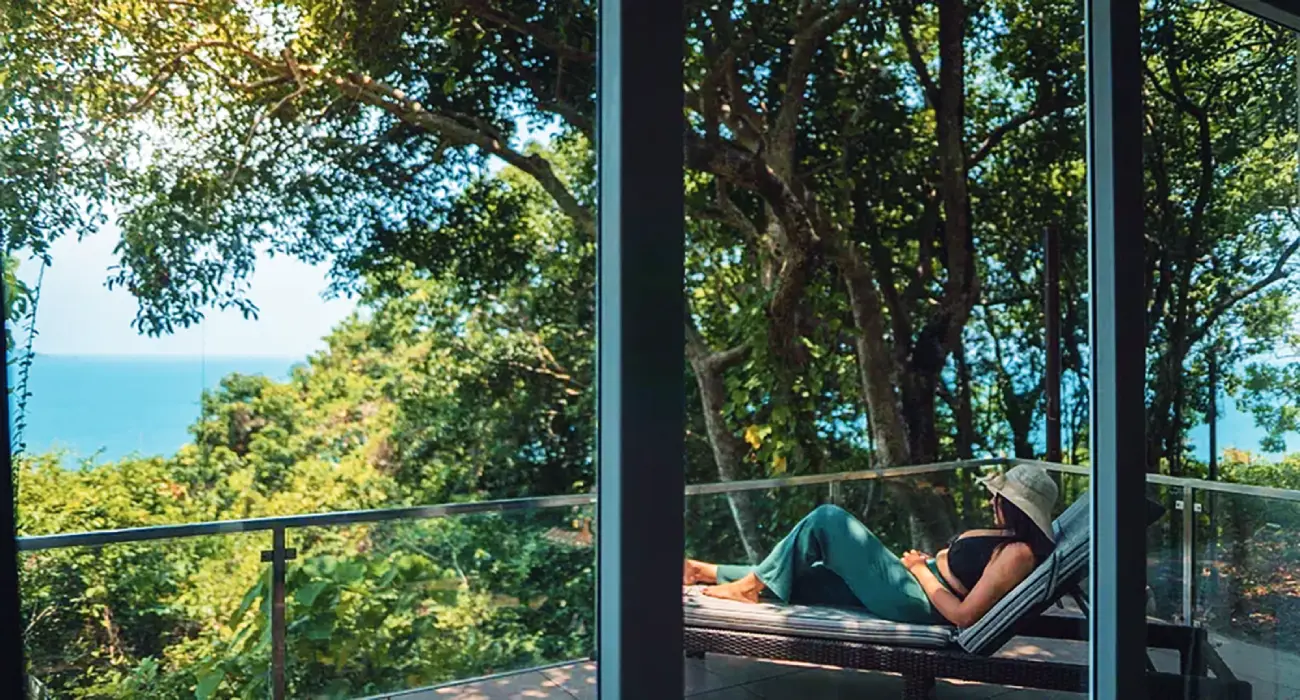
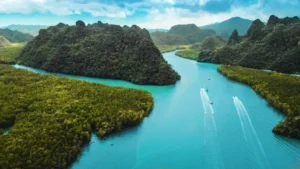
The azure waters of the Arabian Sea peek through the lush forest cover, beckoning you to indulge in exciting adventure sports.
The azure waters of the Arabian Sea peek through the lush forest cover, beckoning you to indulge in exciting adventure sports.