Beyond Blue Horizons
Tucked across the Beas River, near Manali town, is a peaceful Himalayan hamlet called Vashisht, where time slows down, stories linger, and the mountains gently whisper in your ears.
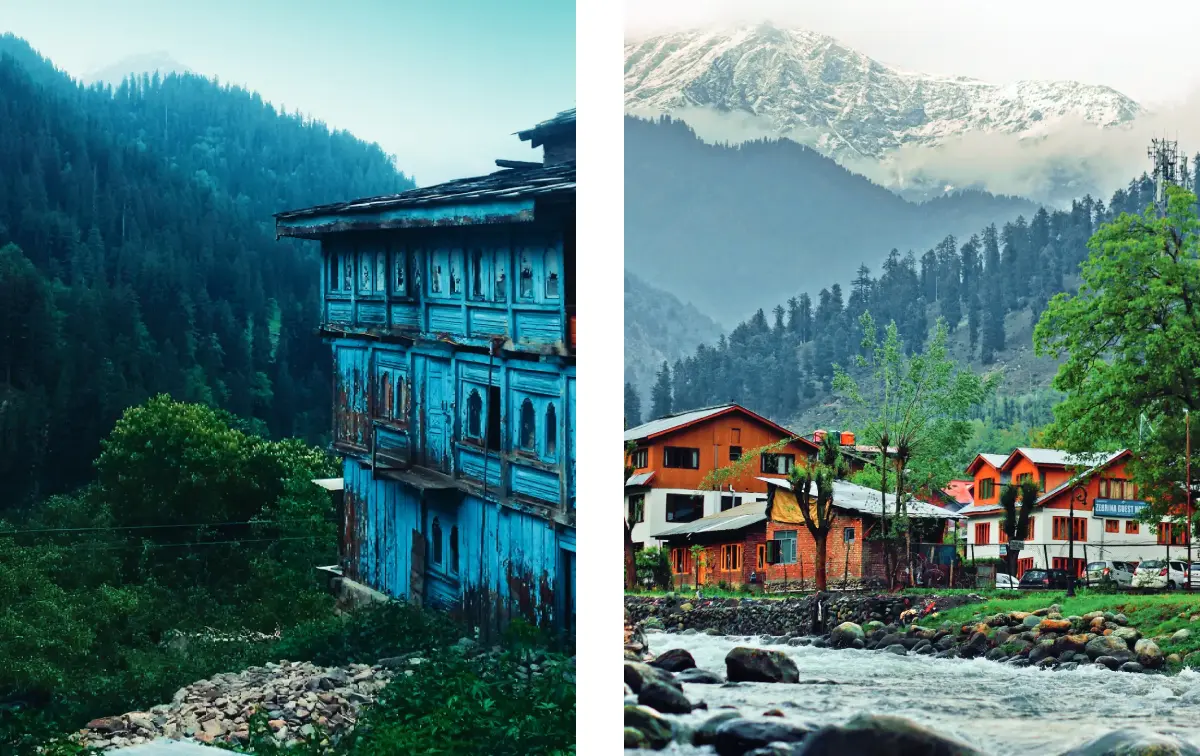
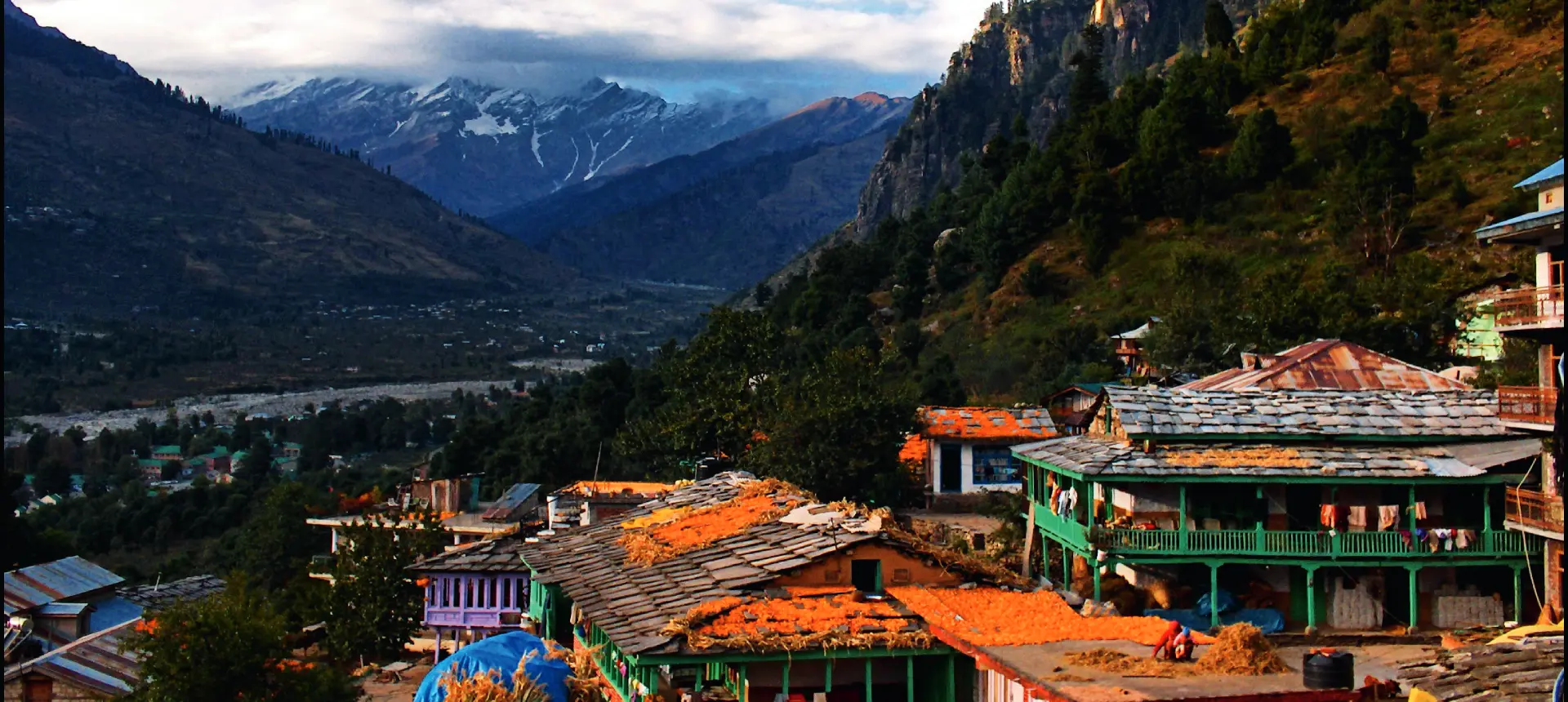
Hedged by tall trees and high Mountains, vashisht seems To be suspended in the past. The air is still with the kind Of silence you only find in Remote mountain villages.
My trip to Vashisht isn’t part of my original itinerary; more of a whispered suggestion than a destination. “Visit if you want to slow down and find some peace,” says one friend. And after several busy and boisterous days in Manali, “slowing down in peace” sounds perfect. The small hamlet of Vashisht sits just across the Beas River, a short auto ride from the main market in Manali. But once you reach, it doesn’t feel close to anything. Hedged by tall conifers and high mountains, Vashisht seems to be suspended in the past. The main road winds upwards, weaving through old houses. The air is still with the kind of silence you only find in remote mountain villages. The quiet is punctuated by a group of women passing by with large bundles of grass on their backs – their bodies bent over to balance the burden but their smiles untarnished by their task. One of them laughs and asks for a picture, before I can ask her for one. Tiny and wrapped in thick Himachali wool, her nose pin catches the sun, matching the shimmer of her eyes and her honest smile.
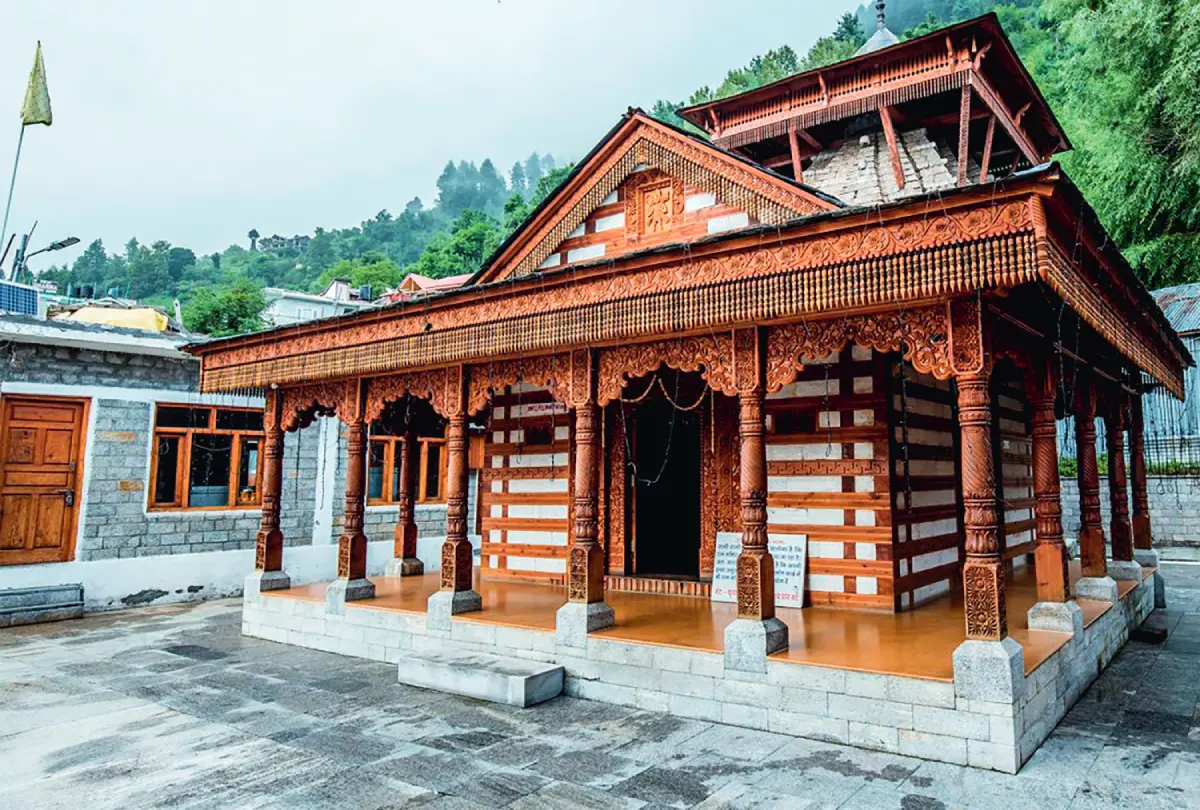
Vashisht is built on stories. It’s named after Sage Vashisht, one of the revered Saptarishis (sages) and Lord Rama’s teacher. It’s believed the sage had sought solace by the Beas. The river cradled and calmed him. Locals narrate many tales – of how the great sage and his wife lived and meditated in this village – and point to the ancient temples dotting the surroundings as proof. The shrines are dedicated to Lord Rama, Sage Vashisht, and other deities. The most prominent is the Vashisht Temple, which is believed to be over 4,000 years old. The quaint temple is built in traditional Himalayan architecture style, adorned with intricate wood carvings and paintings. Devotees throng the temple, coming from far and wide. During the annual Birshu Mela organised in April, villagers carry their gods in decorated palanquins. The atmosphere is of joy, with traditional music, dance and much rejoicing!
The second most popular attraction in the village are the hot springs. Located just behind the temple, with separate bathing sections for men and women, the water is said to have medicinal and healing properties. The women’s bath area is usually quiet, the water surface draped in swirls of steam, with sunlight filtering in and creating hypnotising patterns on the stones at the edge. The water is stinging hot, and I ease in slowly. But after a few minutes, my nerves are soothed, almost lulling me to sleep.
I stay much longer than planned. As I step out, I feel as if I have dropped behind something heavy in the water. The cold air feels good. I walk back to my homestay with wet hair and warm skin, feeling like I have washed away some burden.
In Vashisht, most houses are built in the old way – with stone walls, cedar blocks and stables on the ground floor. The residents live upstairs. Some of the rooftops are home to cafes, which glow at night with fairy lights and soft music. It’s the kind of place that holds you without trying to. The steps of the homes and temples are worn from years of use. The wood feels sun-warmed and slightly smooth when you lean. Even the wind carries something – stone, herbs, smoke, and a bit of pine. In the evening, you can sit in a rooftop café with ginger tea and watch the clouds float by. That’s how a day’s itinerary looks like, and it’s enough.
Manali’s close, but different. Even in just two days, Vashisht slows something in me. Maybe that’s what it does. Vashisht doesn’t try to impress. It pulls you in and heals you, making sure you are tempted to return.